Post Archive

Best Automated Accessibility Assessment Tools

Automated Accessibility Assessment tools are a great way to begin a comprehensive review of accessibility—and can help you identify critical accessibility issues with your website. These tools can help you identify common accessibility problems such as missing alt text, low contrast elements, invalid HTML/CSS markup, and more. Several of these automated tools also include markup warnings and manual checks for further testing. All of the tools included in this review are free web-based services.

Please note that the tools listed below are only a starting point to help you identify potential accessibility problems with your Website. A complete review should always include manual testing with a screen reader or other assistive technology device to insure usability and accessibility.

W3C HTML Validator
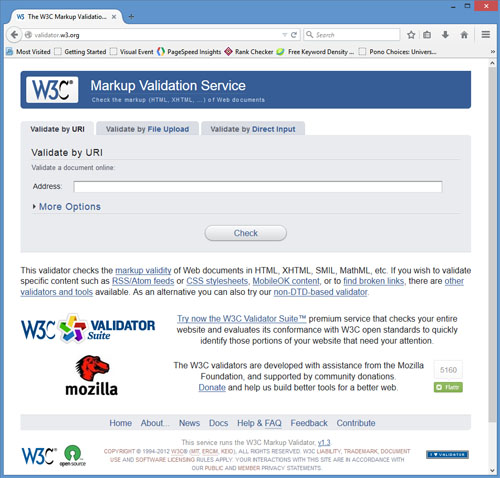
HTML Validator Screenshot

The W3Cs Markup Validation service is an excellent starting point for any accessibility review. This tool scans your site for invalid markup based upon the type of source document (XHTML, HTML5, etc)—and returns any validation errors or warnings. The service is free, and there are no limits to how many pages you can test. The W3C also offers a premium service called W3C Validator Suite which will check your entire website for validation errors.

Learn more about the W3C HTML validator

W3C CSS Validator
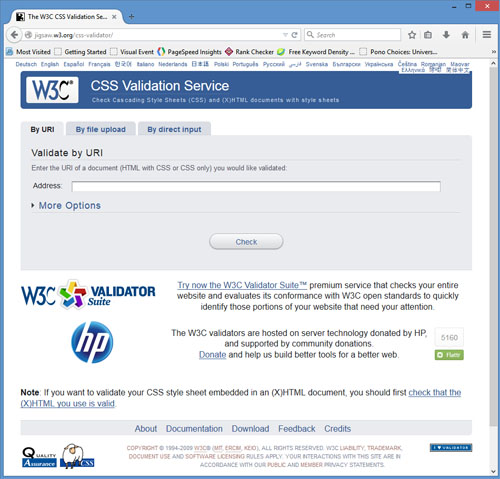
CSS Validator Screenshot

Once you’ve tested your site with the W3Cs markup validation service—you’ll want to test your CSS to make sure that it’s valid. The W3Cs markup validation tool accepts the URL of a webpage and scans all of the CSS files linked from a web page. The CSS validator returns a list of valid CSS declarations and any errors encountered during the scan. It’s important to fix CSS errors identified during this process as they can pose problems for assistive technology devices.

Learn more about the W3C CSS validator

Wave Web Accessibility Evaluation Tool
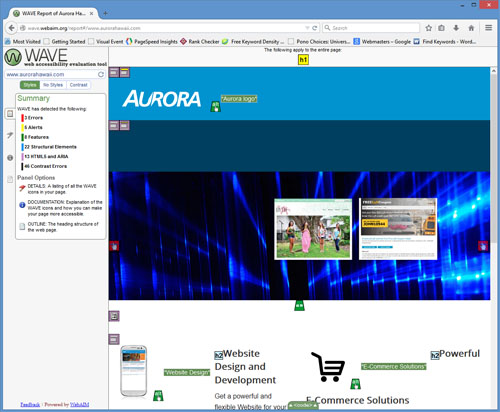
Wave Screenshot

Wave’s Evaluation tool is an excellent choice for automated accessibility reviews. It features a graphical display of accessibility warnings and errors that is easy to read. The scanner includes filters for WCAG A, AA, and AAA compliance, and allows you to preview your site without styles or with user-specified styles. Wave’s evaluation tool also includes contrast warnings to insure that your pages are readable by users with low vision.

Learn more about Wave accessibility tool

A11ygator
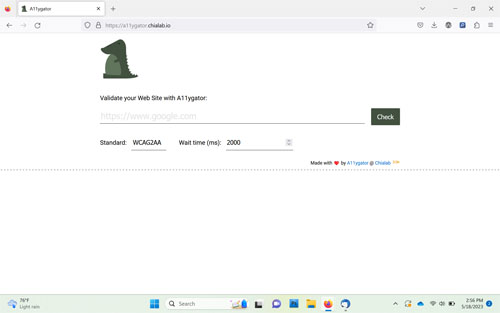
A11ygator Screenshot

A11ygator is a web-based automated accessibility evaluation tool that includes WCAG 2.0 priority A, AA, and AAA guidelines. WCAG failures and manual checks are clearly identified in an easy to read accessibility report. Also, there is a Chrome extension for A11ygator so that you can test pages directly in your Web browser.

Learn more about A11ygator

Conclusion

Automated Accessibility scans are an integral part of any assessment strategy. They provide a first line of defense to quickly identify accessibility barriers, and can help you streamline website accessibility assessment. When combined with manual reviews (including tests with assistive technology devices)—these tools can help you meet or exceed your accessibility compliance goals.

Need help?

Aurora Design and Consulting provides Section 508 and WCAG 2.0 Compliance Testing to help you meet your compliance goals.
Apple Brings its Coding Curriculum to more Blind and Visually Impaired People

The Star Online – May 21, 2018

The textureless glass screen of an iPhone or iPad can seem formidable to someone who is blind or visually impaired, and learning to code on those devices could be even more daunting.

Apple is working to change that. The tech giant is partnering with the Winnetka-based Hadley Institute for the Blind and Visually Impaired to bring its coding curriculum to more people with visual disabilities.


Blind Customers Locked Out by Bank Web Upgrades

Sally Abrahams & Lee Kumutat – BBC Radio 4, Money Box

From the “point of view of someone who can’t see” his bank’s upgrade is “appalling”, says Jeff

HSBC, Metro Bank and Halifax have all admitted to failings after redesigning websites that made it hard for their blind or visually impaired customers to access full services online.

When Jeff Bashton needs to transfer cash or pay a bill, he logs on to his bank’s website, clicks a few buttons and the job is done. It’s quick, easy and efficient. Or at least it used to be – before the bank, HSBC, upgraded its website, with elaborate headings, mortgage offers and banners advertising insurance or foreign currency.


Document Accessibility: Everything You Need to Know

Documents are often overlooked when considering website accessibility—yet inaccessible electronic documents can be a significant barrier for people with disabilities.

Common Types of Document Accessibility Errors include:

  • Documents scanned to PDF format that contain no data for assistive technology devices
  • Documents authored using older versions of Microsoft Word, Adobe InDesign, or other software that is missing critical accessibility features (i.e. alternate text for images)
  • Documents authored using Apple pages or other software that is not accessibility supported
  • Documents authored using the latest publishing tools, but missing key accessibility features (i.e. structured headings, alternate text, etc.)

What Standards Apply to Documents

The Word Wide Web Consortium’s Web Content Accessibility Guidelines (WCAG 2.0) apply to documents published on the web and distributed in electronic formats. Specifically, WCAG 2.0 checkpoints that apply to documents include:

Identifying Inaccessible Documents

Microsoft Word and Adobe Acrobat both include an automated accessibility checker to help you identify errors in your documents. Automated accessibility checkers can help identify basic accessibility errors such as: missing alternate text descriptions, reading order problems, and more.

To get a complete picture of document accessibility, we recommend testing documents with a screen reader to identify barriers and determine compatibility with assistive technology devices. A screen reader can catch accessibility errors that automated scanners might miss including:

  • Alternate text that does not fully describe the content on an image
  • Documents with reading order problems caused by text boxes or table layouts
  • Tab delimited pseudo tables that are missing formatting for assistive technology devices

FREE Document Accessibility Audit

Aurora offers free document accessibility testing for MS Word, PPT, and PDF documents.


Website Accessibility Lawsuits are on the Rise

The Trump administrations first proposed agenda has put website accessibility on the back burner. This means that there will be no new government regulations regarding state and local government websites for the foreseeable future.

This policy change has not slowed the pace of accessibility lawsuits, however. Sayfarth Shaw, LLP reports that website accessibility lawsuits surged to 432 cases in the first eight months of 2017. This is a 65% increase in suits filed compared with 2016. Retailers remain the most popular target for ADA lawsuits with over 50% of reported cases since 2015.

The Bureau of Internet Accessibility contends that a lack of policy direction from the DOJ is likely to spur more accessibility lawsuits in 2017. This makes sense given the uncertainty of website accessibility regulation under the current administration, and the current upward trend in ADA Title III lawsuits.

If you’re a business owner, government agency, or non-profit organization, we recommend that you familiarize yourself with ADA laws, and make sure that your website is compliant with the W3C’s Web Content Accessibility Guidelines. This is the best way to ensure that your website is accessible to people with disabilities– and to avoid a potential lawsuit under ADA title III.

Here are some resources to help you get started:

Get the Help that You Need Today

Aurora is a full-service accessibility solutions provider. We specialize in website accessibility evaluation, repair and certification to help you meet your accessibility compliance goals. Contact us today for a free consultation.


Getting Started with Website Accessibility

Tackling accessibility compliance can be a daunting task. Businesses and non-profit organizations looking to achieve compliance are often left wondering where to begin. This article will cover tips for getting started with website accessibility to help you on the road to achieving your compliance goals.

Whether you’re navigating the complexity of accessibility laws, or working on a strategy to achieve compliance, it’s important to have a plan and document everything during the process. Here are some questions to consider:

  • Where do potential accessibility barriers exist in our technology infrastructure?
  • What level of accessibility do we need to achieve compliance?
  • How do we engage stakeholders in the process?
  • How do we systematically address accessibility barriers and verify compliance?

Answering these questions will help you to identify technology assets, determine an appropriate level of accessibility compliance, engage and communicate with stakeholders, and develop a plan to achieve compliance.

Inventory Your Information Technology Assets

Depending on the size of your organization, information technology assets can be spread across departments, agencies, and divisions. Getting an inventory of these assets, is critical to beginning any accessibility initiative.

Ask your IT support team for an inventory of your technology assets. Information technology systems impacted by accessibility regulations include:

  • Payroll and HR Systems
  • Company Intranets
  • Public-facing Websites
  • Electronic Documents and Forms

Develop an Accessibility Policy

An accessibility policy is critical to any accessibility initiative. A good accessibility policy lays the foundation for a successful accessibility campaign, and communicates your organization’s accessibility goals to all stakeholders.

An organization accessibility policy should include:

  • Target accessibility conformance level and date to achieve conformance with the World Wide Web Consortium’s Web Content Accessibility Guidelines (WCAG 2.0)
  • Information technology systems impacted
  • Stakeholder Responsibilities
  • Description of process to review and monitor technology assets for accessibility compliance
  • Enforcement policies and procedures

Refer to the W3C’s Developing Organizational Policies on Web Accessibility for more information about developing an accessibility policy.

Develop an Implementation Plan

Meet with stakeholders including your IT support team, leadership, and administrators to discuss implementation of your new accessibility policy. Discuss stakeholder responsibilities, target conformance level, systems impacted, and your target date for accessibility conformance.

Develop an implementation plan for your organization. A good implementation plan should include:

  • Priorities for evaluation and repair of information technology assets
  • Timeline for accessibility conformance of IT assets
  • Stakeholder tasks and responsibilities
  • Schedule for regular meetings to track progress of accessibility upgrades

Engage third-party accessibility solutions providers as needed to streamline the compliance process, and move forward with your accessibility implementation plan.

Need more help?

Take the worry out of compliance with our website accessibility compliance solutions.


US Access Board Releases Final Rules for Accessibility of Information Technology under Section 508

On January 9, 2017, the Board released a final rule that jointly updates requirements for information and communication technology covered by Section 508 of the Rehabilitation Act and Section 255 of the Communication Act. The Section 508 Standards apply to electronic and information technology procured by the federal government, including computer hardware and software, websites, multimedia such as video, phone systems, and copiers. The Section 255 Guidelines address access to telecommunications products and services, and apply to manufacturers of telecommunication equipment.

Learn more about the ICT refresh


Aurora Announces Re-branding of Web Presence

Aurora Design and Consulting has launched a new website. The new site features a responsive layout for enhanced performance on mobile devices.


Best Plugins for WordPress

WordPress is a highly extensible Web Content Management System. The following list includes both paid and free WordPress plugins.

iThemes Security

iThemes Security

With the increasing popularity of WordPress CMS—Wordpress sites have become a popular target for spammers. To harden your site against spammers and other attacks, we recommend iThemes security plugin. The plugin supports:

  • Login limits to deter brute force attacks
  • Automated Database backups
  • Automated file and directory configuration
  • Intrusion and file change notifications
  • And more

If you are looking for a complete security plugin for WordPress, look no further than iThemes security plugin. There is also a pro version of iThemes security with enhanced support and features.

W3 Total Cache

W3 Total Cache
W3 Total Cache is the best performance plugin for WordPress. Here are some  features:

  • Browser, Database, and Object Caching
  • CSS and JS Minification and Aggregation
  • Asynchronous Loading for JS and CSS
  • And more

Check out a full list of features here: https://wordpress.org/plugins/w3-total-cache/ . W3 Edge also offers premium support and a pro version of W3 Total Cache .

Visual Form Builder

Visual-Form-Builder

Visual form builder is a great plugin for managing Web forms. The plugin includes a GUI form builder and allows you to easily add form fields and fieldsets to your forms. The plugin includes built-in support for: fieldset, checkboxes, text boxes and areas, select groups, and more. The plugin also supports:

  • Standard and Required Fields
  • JQuery Validation
  • Customized confirmation messages
  • Email notifications
  • From data accessible via the admin console
  • Data export to CSV format

If you are looking for a great GUI form builder, Visual form builder plugin fits the bill. There is also a pro version of form builder.

WordPress SEO Plugin by Yoast

Wordpress-SEO-Yoast

WordPress SEO is a great tool for optimizing your website for search engines. The plugin allows you to enter SEO titles and descriptions for posts and pages, and takes the guess work out of SEO by providing instant feedback and analysis of pages and posts in the admin console. The plugin also features:

  • XML Sitemap generation
  • Robots meta configuration
  • Permalinks cleanup
  • Breadcrumb controls
  • And more

If you are looking for a comprehensive SEO tool for WordPress, WordPress SEO Plugin by Yoast is an excellent choice.

Google Analytics for WordPress

Google Analytics WordPress
Google Analytics for WordPress is a great way to integrate analytics into your Web site. The plugin uses the asynchronous Google Analytics tracking code and supports:

  • Easy integration of analytics tracking code
  • Outbound link & downloads tracking
  • Debug mode
  • And more

Learn more about Google Analytics for WordPress .

Tribe Events Calendar

Tribe Events Calendar
Tribe Events Calendar is a great plugin for displaying and managing events in WordPress. It provides all the features that you would expect in an events manager app including:

  • Built-in Calendar with list and calendar view
  • Event Search
  • Support for Google Maps
  • Event Taxonomies
  • Upcoming Events Widget
  • And more…

If you are looking for a rock-solid and accessible events manager in WordPress— look no further than Tribe Events Calendar. Learn more about Tribe Events Manager Plugin. There is also a pro version of Tribe Events Calendar with enhanced support and features.

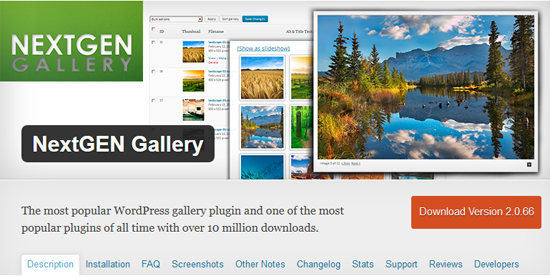
NextGEN Gallery

Nexgen-Gallery
Nexgen gallery is a great way to incorporate slideshows and image galleries on your Web site. The plugin features:

  • Batch image uploads
  • Meta data entry
  • Thumbnail management
  • Automated watermarks
  • And more

Learn more about Nexgen gallery plugin

Aurora Website Design Services

Aurora develops custom WordPress Web sites for business and non-profit organizations. Check out our Website design services page for more information.


Choosing a Content Management System

Choosing the right Content Management System (CMS) for your site is critical to getting the most from your business or non-profit website.

Why Use a Content Management System?

With the emergence of WordPress, Joomla, Drupal and other content management systems (CMS), its never been easier to publish and manage content on the web. Some advantages of using a CMS include:

  1. Make updates and changes to your website directly via a Web console
  2. Reduce long term maintenance costs
  3. Access thousands of free plugins and modules to extend your Website

Drupal vs WordPress

Drupal and WordPress are two of the most popular open source content management systems available. As of June 2017, the market share for WordPress was about 59%, while Drupal represents about 7% of the total open source CMS installs.

Drupal

Drupal

Drupal is an excellent choice for robust Web sites requiring numerous custom content types and e-commerce functionality. Here are some advantages to using Drupal CMS:

Advantages

  1. Well established developer community with thousands of free modules.
  2. Powerful custom content and views modules provide a robust framework for dynamic Web sites
  3. Excellent and FREE e-commerce tools such as Ubercart, Drupal Commerce, and more.
  4. Incredible flexibility and extensibility

Disadvantages

  1. Higher development and maintenance costs than WordPress
  2. Core updates require manual file and database upgrades

Learn more about Drupal

WordPress

Wordpress

WordPress began as a blog platform, and is one of the most popular content management systems in use today. Sites that use WordPress are highly extensible and easy to manage.

Advantages

  1. Well established developer community with thousands of free plugins
  2. Updates and maintenance are easily managed via the WordPress dashboard. This includes WordPress core updates.
  3. Lower maintenance costs than Drupal and other CMS systems.
  4. Good flexibility and extensibility

Disadvantages

  1. Some of the better e-commerce tools for WordPress are paid plugins and require a subscription
  2. Less powerful than Drupal and other CMS platforms

Learn more about WordPress

And the Winner Is…

There’s really no real winner as both are excellent CMS systems. We recommend using WordPress for smaller business websites as its easier and more cost-effective to manage. For e-commerce applications, we recommend using Drupal with Drupal Commerce for greater power and flexibility.

Get Help Today

Aurora develops powerful and flexible Websites using the latest CMS systems including Drupal, WordPress and Joomla. Contact us today for a free consultation


Request a Quote